The post Can Hydraulic Hose Be Used for Gasoline and Diesel? appeared first on .
]]>
This leads some to believe these hoses are compatible with gasoline and diesel as well. However, the reality is different: hydraulic hoses are only suitable for hydraulic oil. Using them with gasoline causes problems. In this article, I will discuss everything about the compatibility of hydraulic hoses with gasoline and diesel. So, let’s get started!
What Is a Hydraulic Hose?
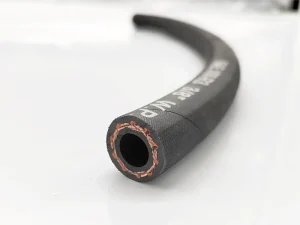
Before we go into detail, let’s first understand the basics of hydraulic hoses.
Hydraulic hoses are pipes that are used to carry hydraulic fluid. They consist of three layers. The inner layer remains in contact with hydraulic oil. A reinforcement layer in the middle and an outermost layer provide strength and durability. Reinforced layers make these hoses withstand high pressure. These hoses are typically used in different hydraulic systems.
As mentioned above, hydraulic hoses have a specific layer design. These layers make these hoses strong and able to withstand high-pressure hydraulic systems. The innermost layer, which contacts the oil, is made of synthetic rubber. The most common synthetic rubber used in this layer is NBR (nitrile rubber). In the middle, there are reinforced layers which can be of two materials.
These are either reinforced fabric or steel. The hoses with fabric reinforcement are not suitable for extreme pressure. They perform decently in moderate pressure conditions. On the other hand, hydraulic hoses with steel wire reinforcements are best for high-pressure conditions. The outermost layer protects the hose from UV rays, moisture and other elements.
This outer layer is made of either neoprene or CPE. It is worth noting that the inner layer of the hydraulic hose is most important. Why? That’s because it remains exposed to hydraulic oil. If this layer is weak, it may deteriorate quickly when it comes into contact with hydraulic oil. These hoses are available in different sizes, thicknesses, and diameters. This means customers choose these hoses based on their specific requirements.
Can Hydraulic Hose Be Used for Gasoline?
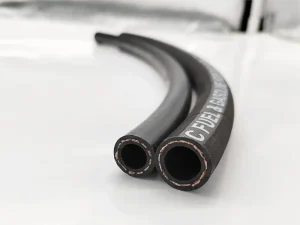
Generally, no, but it depends mainly on the inner-layer material of the hydraulic hose. Hoses with inner layer materials such as EPDM or NR are not resistant to gasoline. However, some hydraulic hoses with NBR inner layers can be used for gasoline. Remember, it mainly depends on the inner layer material of hydraulic hoses.
For example, hoses with EPDM or NR inner layers may face swelling when carrying gasoline. However, hydraulic hoses made of NBR or HNBR can carry gasoline. As I said above, the inner layer of the hydraulic hose is most important. It remains in contact with hydraulic oil. There are different materials used in these layers.
Material compatibility with gasoline determines whether the hose can be used for gasoline. For example, EPDM, NR, and Silicone are not resistant to gasoline. Hydraulic hoses made of these materials may not be suitable for carrying gasoline. Other materials resist both hydraulic oil and gasoline.
These include NBR, HNBR, and PTFE. Hydraulic hoses with an inner layer made of any of these materials can be used to carry gasoline. This means no hydraulic hoses can be universally good or bad for carrying gasoline. Compatibility with gasoline depends on the inner-layer material. Before deciding, you should check the inner layer materials. This will help you decide whether you should use the hydraulic hose for gasoline.
Can Hydraulic Hose Be Used for Diesel?
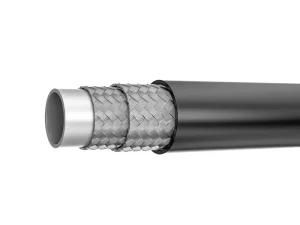
Yes, you can use hydraulic hoses for diesel, depending on their inner-layer material. However, not all hydraulic hoses are suitable for carrying diesel. Whether a hose can carry diesel depends on its inner-layer material. If the inner-layer material resists diesel, the hydraulic hose can be used for it, and vice versa.
Remember, conditions for both gasoline and diesel are almost the same. The inner layer of hydraulic hoses defines their usability for diesel. As I said above, a wide range of materials are available for inner layers. These include NBR, NR, EPDM, HNBR, and more. The hydraulic hoses made of NBR or HNBR are resistant to diesel.
You can also use these hydraulic hoses for diesel; some materials are not suitable for diesel. These include EPDM, NR and more. Do not use hydraulic hoses with inner layers made of these materials for diesel. What happens if you use such hydraulic hoses for diesel? As discussed above, the inner layer remains in contact with the fluid.
Since those materials are not resistant to diesel, diesel will deteriorate the hose’s inner material. As a result, the inner layer may swell, crack, or even get damaged. This can cause leakage and affect the hydraulic hose’s performance. That’s why it is essential to consider the inner layer material of a hydraulic hose before using it for diesel.
Hydraulic Hose vs Fuel Hose
Many believe hydraulic hoses and fuel hoses are the same. However, that’s not true, as each hose type is suited to different fluids. Fuel hoses are best suited for carrying gasoline and diesel. On the other hand, hydraulic hoses are specialised for carrying hydraulic fluids. These hoses are rated for high-pressure conditions.
Hydraulic hoses are made to withstand high-pressure hydraulic oil. As I said above, these hoses are used in hydraulic systems. The system involves transferring highly pressurised oil between different components. Therefore, hoses are made to withstand high pressure. Most hydraulic hoses come with steel wire reinforcement.
This layer ensures these hoses perform excellently under high pressure. However, the fuel hoses are not exposed to high pressure. So they don’t need steel wire reinforcement. Instead, a fabric-reinforced layer is enough for these hoses. Hydraulic hoses have an inner layer resistant only to hydraulic oil. These materials include natural rubber, NBR, EPDM, and more.
However, fuel hose inner layers cannot be made with NR or EPDM. This is because these materials are not resistant to fuel. Instead, these fuel hoses use inner layers made of NBR, HNBR, FKM, PTFE, and so on. If a hose has an inner layer made of NBR, it can be used for both hydraulic oil and fuel. But not all hydraulic hoses come with an inner layer made of NBR. Therefore, you should always choose different hoses for different fluids.
What Happens When You Use the Wrong Hose?
Honestly, I don’t recommend replacing the fuel hose with a hydraulic hose. That’s because both of these hose types have different properties. Hydraulic hoses are designed for hydraulic systems. If you use fuel hoses as hydraulic hoses, they will fail. Below are some consequences you might face when using hoses interchangeably:
-
Inner Tube Swelling
The hydraulic hose inner layer is most important. However, when exposed to fuel (gasoline or diesel), this layer can swell. This is more common when the inner layer is made of a material that isn’t very strong. This swelling can affect hose performance. A swollen inner tube may eventually leak.
-
Cracking
As you know, hydraulic hoses can withstand high hydraulic pressure. However, when you use a fuel hose in a hydraulic system, that pressure can crack the fuel hose. These cracks can damage the hose, especially if the hose is exposed to high pressure for a long time. Additionally, cracks can also cause leakage issues.
-
Fire Hazard
Hydraulic hose inner layers can be made of various materials. If it is made of natural rubber or PTFE, this layer can be very weak. If exposed to gasoline, this inner layer can deteriorate quickly, resulting in gasoline leakage. This leaking gasoline can cause highly flammable vapour. These vapours can create a fire risk.
-
Layer Separation
As I said above, hydraulic hoses are made in different layers. These layers are bonded together to make a strong structure. However, when these hoses are exposed to fuel, they start to get weakened. The layer bonding weakens, resulting in layer-to-layer separation. If this happens, the hydraulic hose loses its pressure-handling capability. As a result, they become unsuitable for most hydraulic systems.
Frequently Asked Questions
Can a hydraulic hose be used for gasoline temporarily?
Yes. However, you should also use hydraulic hoses for gasoline if they have an inner layer made of NBR or PTFE. Such hydraulic hoses offer excellent performance and can be used for gasoline.
Does an oil-resistant hydraulic hose resist gasoline?
It depends on the hydraulic hose’s inner layer. If the inner-layer material resists gasoline, you can use the hose for gasoline. Oil resistance alone is not enough for a hydraulic hose to be used with gasoline.
Can diesel cause a hydraulic hose to swell?
Yes. Some hydraulic hose inner layers are made of weak materials. These materials are sensitive to both diesel and gasoline. When exposed to diesel, this material undergoes a chemical reaction. As a result, they swell, which leads to their deterioration.
Which Hose materials are suitable for gasoline and diesel?
Hydraulic hoses with inner layers made of NBR, PTFE, FKM and CPE are suitable for gasoline. These materials resist both gasoline and diesel. When exposed to fuel, these materials remain in good condition.
Conclusion: Should You Choose Hydraulic Hose for Gasoline and Diesel?
Let’s conclude: I don’t recommend using hydraulic hose for both gasoline and diesel. If you do, you may face complications, as the inner layer may crack, swell, or get damaged. That’s why risking your hydraulic hose may not be worth it. If you have a hydraulic hose with a strong inner layer, you can use it. Some hydraulic hoses come with an inner layer made of NBR or PTFE.
These materials resist gasoline and diesel. Before using it, check the hose’s inner-layer material to avoid complications. You can use these hoses for gasoline, but I still don’t recommend it. Instead, choose a fuel hose for gasoline and diesel. Hydraulic hoses are made to transport pressurised hydraulic oil.
The post Can Hydraulic Hose Be Used for Gasoline and Diesel? appeared first on .
]]>The post What Are Industrial Hoses? Main Functions and Applications appeared first on .
]]>
What Are Industrial Hoses & How Do They Work?
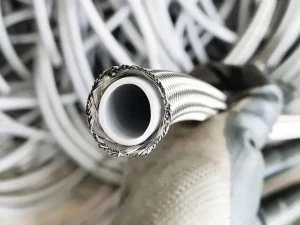
Industrial hoses are special flexible tubes that move liquids, gases, air, and other materials from one place to another. They are made for use in construction, chemical plants, and many other industries. Unlike ordinary hoses, they are built to handle tougher conditions, such as high pressure, heat, chemicals, and heavy use.
The working method of industrial hoses is very straightforward. Any material that needs to move from one place to another can use a hose as a path. For example, a pump can push water into one end of a hose, and the water travels through and comes out the other end. This same working idea applies to oil, air, chemicals, and other materials.
However, what makes industrial hoses stand out is their flexibility. Regular hoses that you see are often stiff. This makes them difficult to fit in tight spaces. However, industrial hoses are made with materials like rubber, PVC, and thermoplastic. These materials are highly flexible and can bend easily without the risk of breaking. But with flexibility, they are also strong at the same time.
Basically, industrial hoses are made with several layers. The inner layer carries the material and is designed to suit what it transports. Then there comes a reinforcement layer that gives the hose extra strength. This becomes especially important when the material inside is under pressure. Lastly, the outer cover protects the hose from damage outside, such as heat, sunlight, oil, or rubbing against other surfaces.
What Are the Main Functions of Industrial Hoses?
Now you have basic know-how about industrial hoses and how they work. Right? But if you think these hoses only help carry materials, you are wrong. They also perform different jobs in industrial systems. So let’s discuss the major functions of industrial hoses.
1- Help Move Liquids
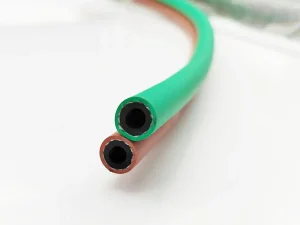
The first major job of an industrial hose is to move different types of material from one place to another. Many workplaces need to move water, liquids, chemicals, or other materials for different operations. An industrial hose gives these liquids a clear path to travel from one point to another. For example, there is a machine that needs a steady supply of coolant while it is running. Here, workers don’t use a fixed pipe that cannot move easily. But they use a hose that connects the coolant supply to the machine. The hose bends around the equipment and allows the liquid to flow where it is needed.
2- Carry Different Gases
It is not crucial that everything that moves through an industrial system is always a liquid. Many machines also have to move gases to reach the right place. Industrial hoses make that possible. They carry gases such as compressed air, oxygen, nitrogen, and other gases used in different industrial operations. Take compressed air as an example. An air compressor produces and stores compressed air. But that air needs a way to reach a machine, tool, or other equipment. Right? That’s the air hose that connects the two and allows the air to flow where it is needed.
3- Handling Abrasive Materials
Some industrial jobs handle materials that slowly wear away the inside of a hose. These are called abrasive materials. Common examples include sand, gravel, cement, minerals, and some slurries. When these materials move through a hose, their hard particles repeatedly rub against the inner surface. It might not cause problems immediately, but over time, they can cause wear. But industrial hoses made for such material are highly robust. Their reinforcement layer is made with abrasion-resistant material like stainless steel. This helps the industry move such abrasive material easily.
4- Connecting Moving Equipment
Machines do not stay in one position while working. Some parts move, lift, rotate, or change position during operation. A fixed pipe cannot easily follow this movement. However, an industrial hose moves easily. Its flexible design lets it connect two pieces of equipment even when one moves. Suppose a machine has a moving arm. The machine needs hydraulic oil, air, or another fluid while the arm moves up and down. Here, an industrial hose connects that arm to the main supply and bends along with the movement.
5- Absorbing Vibration
Another top-notch function of industrial hoses is absorbing vibrations. Basically, industrial machines shake when they run. Pumps, compressors, engines, and other equipment create these small but repeated movements. If these vibrations reach joints, they can put stress on them and loosen them. But industrial hoses act as a flexible link between moving parts and joints. As these parts move, the hose flexes slightly, absorbing movement and preventing it from reaching the joints.
6- Providing Temporary Connections
Industrial hoses are also handy when you need to connect two pieces of equipment for a short period. Sometimes a machine is going through repairs, or a new system is being tested. In that situation, you need a temporary connection. That connection is what an industrial hose offers. For example, a factory has to move water from a temporary tank to a machine for a few days. If you install a fixed pipe for such a short job, it doesn’t make sense. It will be time-consuming and definitely costly. That’s why workers connect an industrial hose between the tank and the machine. Once the job is finished, you can disconnect and remove the hose.
Common Applications of Industrial Hoses Across Different Industries
So many functions show that industrial hoses aren’t limited to one type of work. That’s why many industries use them to gain different advantages. So let’s discuss and explore the major industries where industrial hoses actually perform.
1- Manufacturing Industry
The manufacturing industry is one of the main users of industrial hoses. It uses many machines. Most of these machines need fluid and air pressure to operate. Industrial hoses connect those machines to pumps, tanks, and supply lines to deliver fluid. For example, an industrial machine needs coolant to prevent its parts from overheating. A hose brings coolant from a supply unit to the machine and carries it back after use. Manufacturing workplaces are also crowded, so flexibility is a major priority. These industrial hoses provide that flexibility.
2- Construction
Construction sites are constantly changing. Equipment moves from one area to another. As a result, workers set up temporary systems. In construction, different materials also sometimes need to be supplied where the work is happening. Industrial hoses play a role in all of this. These hoses carry water, compressed air, concrete, cement, and other materials.
3- Oil and Gas
Another use of industrial hose is in the oil and gas sector. This industry moves many fluids between equipment, storage areas, and processing systems. Often, oil and gas move at high pressure. That’s why industrial hoses provide a flexible, durable transfer path. They transfer crude oil, fuel, water, chemicals, and other fluids.
4- Agriculture Industry
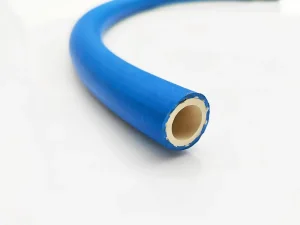
Farming is more than planting and harvesting crops. It uses water, fertilizers, chemicals, and hydraulic fluids, all of which must reach the right equipment or area. Industrial hoses make this possible by giving farmers and agricultural machines a way to move these materials. For example, a water hose carries water for irrigation. It might also move fertilizers through spraying equipment.
5- Chemical Processing
The chemical processing industry is one of the toughest working environments. It deals with liquids and harsh chemicals that ordinary pipes cannot handle. They quickly deteriorate. But some chemical hoses are specifically designed for this purpose. They contain acid- and other chemical-resistant materials that don’t get damaged by these chemicals. However, not every industrial hose can handle chemicals. That’s why the hose material must be compatible with the specific chemical.
6- Food and Beverage Processing
The main concern in the food industry is hygiene. Many food items must move from one part of the process to another without risking contamination. That’s where some food-grade industrial hoses make things easier. They are made from specific food-grade plastic or rubber that doesn’t react with food. Their smooth inner surfaces also make cleaning easier and help reduce the chance of material building up inside the hose.
7- Mining
Now, there is the mining industry, which relies on industrial hoses. It deals with materials like slurry, mud, minerals, and other mixtures. Workers often have to move these materials from one part of a site to another. But the major challenge here is abrasion. Slurry and mineral particles often rub against the inside of a regular hose. As a result, they can get damaged. But Industrial hoses do this job very well. They use a reinforcement layer that handles abrasion without the risk of deterioration.
How to Choose an Industrial Hose for a Specific Application: Key Factors You Must Consider
Industrial hoses are made for different working environments. That’s why they come in different types. You cannot choose a single hose for every purpose. So how would you know which material fits your application? Don’t worry! Here are some factors that you must consider before choosing an industrial hose.
- Material Being Carried: First, know what type of material will flow through the hose. It might be anything like water, oil, fuel, air, chemicals, food products, slurry, or something else. Each material affects the inside of the hose differently. So make sure the hose you choose is compatible with the material flowing through it.
- Working Pressure: Pressure is the force the material puts on the inside of the hose. Different materials exert different forces. So check the hose’s pressure rating and compare it with the pressure in your system. Choose a hose with a safety margin rather than operating right at its maximum limit.
- Hose Size & Diameter: Hose size decides how easily the material will flow through the hose. In terms of size, the most important thing is the hose’s inner diameter (ID). It determines the space available for the liquid or gas to pass through. The diameter should match the flow rate, equipment connections, and system requirements.
- Flexibility & Movement: Some hoses stay in one position, while others move every time the machine operates. That’s another factor that can affect your choice. If the hose is to bend, move, or follow a machine’s motion, make sure it is flexible enough for that job. Consider how the hose will move during operation, and choose a design that can handle it.
- External Conditions: Finally, look at everything the hose will face from the outside. If it will constantly face sunlight, rain, heat, cold, oil, chemicals, dust, or sharp edges, make sure the material can handle it all.
Conclusion
Industrial hoses are flexible tubes that carry many types of material from one place to another. They move water, oil, chemicals, air, food products, and other materials. But their role isn’t limited to that. They also help connect machines, reduce vibration, and make temporary connections much easier. But with so many types of industrial hoses, choosing the right one is key. Before choosing one, look at what it will carry, the pressure and temperature, the hose size, and how much it needs to move. Remember, a hose that fits the job lasts longer and prevents leaks, damage, and unwanted downtime.
The post What Are Industrial Hoses? Main Functions and Applications appeared first on .
]]>The post Differences Between Suction and Discharge Hoses appeared first on .
]]>
Interestingly, people often compare them and consider them head-to-head competitors. However, that’s wrong, as these hoses offer different roles and fit in different conditions. This means you’ll have to choose both for their specific purpose. In this article, I will discuss all the major differences between these two industrial hoses. So, let’s get started.
Overview of Suction and Discharge Hoses

Before discussing distinctions, let’s first discuss the basics of these two hose types.
Suction and discharge hoses are two types of hoses that help transport liquids. Suction hoses suck and take liquid towards the pump from the reservoir. These hoses undergo negative pressure during operation. In contrast, discharge hoses are connected to the pump outlet. They take the liquid out towards the destination and work under positive pressure.
Suction hoses are connected to the pump inlet. This means they bring liquid from the tank or reservoir to the pump. After that, the pump pushes the liquid outwards through the discharge hoses towards the destination. Suction hoses suck the liquid and pull it inwards towards the pump. In doing so, these hoses experience negative pressure, which increases the risk of collapse.
So manufacturers use high-quality material and helix or spiral reinforcement on them. This reinforcement keeps these hoses in shape even when they work under negative pressure. Simply put, these suction hoses are vacuum-resistant, making them ideal for sucking liquid towards the pump. Even under vacuum conditions, these hoses continue to operate and transport liquid.
On the other hand, discharge hoses are designed to take the liquid away from the pump. They don’t need to be very strong as they work under positive pressure. Additionally, these hoses don’t collapse, which is a significant advantage. Manufacturers use PVC or rubber materials to make them. However, some hoses also come with reinforcement, which makes them highly durable and resistant to high pressure.
Difference Between Suction and Discharge Hoses
As I said above, these two hoses differ in many respects. These differences make them suitable for use in different conditions. Before choosing any of these, it is crucial to understand their differences. In the section below, I will discuss the major distinction between suction and discharge hoses.
1- Conditions & Pressure Type (Vacuum vs Positive Pressure)
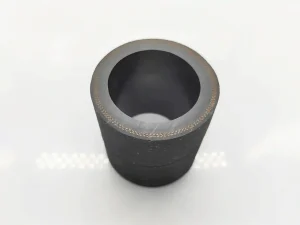
Suction and discharge hoses operate under different conditions and at different pressures. As I said above, the suction hoses create low or negative pressure. This helps pull or force the pressure inwards (towards the pump).
This negative pressure creates a vacuum that can cause the hose to collapse. In contrast, discharge hoses work under positive pressure. The pump pushes the liquid away, which travels through these discharge hoses. Since these hoses are used to discharge the liquid, the pressure inside remains positive. This results in no collapsing issues in these hoses.
2- Function & Flow Direction (Inlet vs. Outlet Pump)
The primary function of both suction and discharge hoses is the same: transporting the liquid. However, these two hoses differ in terms of how they are connected to the pump. The suction hoses are connected to the pump inlet. Their role is to take the liquid from the reservoir or tank to the pump by creating negative pressure.
On the other hand, the discharge hoses are connected to the pump outlet. This is where the liquid leaves the pump and goes towards the destination. These hoses operate under positive pressure, directing the liquid towards the destination. Remember, in any application, these two hoses can be used together to ensure smooth liquid transport.
3- Kinking & Collapse Issues
The suction hoses operate under negative pressure, creating a vacuum inside them. This vacuum makes the hoses kink and collapse even while they are working. That’s a serious concern that is very common in low-quality suction hoses. Modern manufacturers add helix or spiral reinforcement on these hoses.
This reinforcement gives them strength and prevents them from kinking. In contrast, the discharge hoses are not exposed to negative pressure or vacuum. So, they don’t kink or collapse during work. However, if you handle them wrong, they can bend due to their flexibility. When they are working, you don’t need to worry about their kinking.
4- Durability & Maintenance
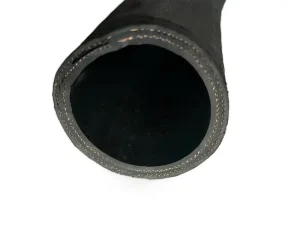
Both of these hoses are excellent for durability. However, the suction hoses stand out primarily due to their reinforcement layer. This reinforcement layer makes them strong and kink-resistant. Most discharge hoses are made of rubber or PVC and lack reinforcement. So the chances of leakage and bursting in such hoses are higher.
However, those discharge hoses with proper reinforcement last longer and are very durable. However, I rate suction hoses slightly higher, as most of them come with reinforcement. Remember, discharge hoses may require regular maintenance due to leakage issues. If you choose a reinforced hose, maintenance needs will be minimal.
5- Construction & Reinforcement
Suction hoses are unique in their construction. As I said above, these hoses work under vacuum conditions. So they must be strong enough to keep their shape and not collapse. So manufacturers make reinforced-layer designs for these hoses. They consist of spiral or helix reinforcement layers. This layer offers strength, allowing these hoses to resist kinking.
In contrast, most of the discharge hoses don’t have helix reinforcement. Instead, they consist of textile braiding, which provides them with some rigidity. Since these hoses don’t experience vacuum conditions, they are well-suited to textile braiding. Remember, some discharge hoses also come with helical steel braiding, which adds even more strength.
6- Material & Portability
Suction hoses are designed to face extreme pressure, right? That’s why they are typically made with heavier and more durable materials. The most common materials used for suction hoses include NBR, TPU, PVC, steel wire (for a helical structure), and synthetic rubber. Remember, PVC suction hoses are only suitable for transporting water.
In contrast, hoses made of NBR material can transport fuel and oil. Suction hoses made of different materials offer unique properties. The discharge hoses are typically made with lightweight materials such as PVC, synthetic rubber, or EPDM rubber. Additionally, they can include textile or nylon reinforcement for added strength. Only premium discharge hoses come with steel wire reinforcement. This steel wire reinforcement makes them exceptionally stronger and more durable.
7- Flexibility & Weight
Suction hoses are heavier and less flexible. Why? The reason is that these hoses consist of a strong reinforcement layer, which makes them stiff. This reinforcement layer also prevents them from kinking or collapsing under negative pressure. However, their heavier materials and reinforcement increase their weight. So carrying and installing these hoses can be a bit more challenging.
On the other hand, discharge hoses are very flexible. They are made with lightweight materials, which makes them flexible. This also improves ease of carrying and installation. Excellent flexibility of discharge hoses also helps you install them in very tight spaces with ease. Installing suction hoses in tight spaces can be very difficult due to their stiffness. If you expose them to load or stress, they can be damaged by stiffness.
8- Cost & Applications
Suction hoses are expensive, which is a significant drawback. However, people have no choice but to buy them, as they can easily handle negative pressure. The reason for their high price lies in their structure, reinforcement, and materials. They come with spiral or helical reinforcement and strong materials. Most manufacturers use abrasion-resistant material in making them.
These durable materials make prices slightly higher but ensure excellent durability. On the other hand, discharge hoses are very affordable, which is very advantageous. That’s because of their simple design and less-strong materials, which are cheap. When it comes to application, suction hoses are used to handle negative pressure. In contrast, discharge hoses are best suited for positive-pressure applications.
Here is the table showing the application comparison of these two hoses:
| Suction Hose Applications | Discharge Hose Applications |
| Pumping from tanks | Water transfer |
| Pond & pool pumping | Irrigation |
| Sump pumping | Dewatering |
| Slurry handling | Drainage |
| Wastewater pumping | Floodwater removal |
| Tanker unloading | Construction pumping |
| Vacuum applications | Industrial fluid transfer |
Frequently Asked Questions
What is the purpose of a suction hose?
The purpose of a suction hose is to draw liquid or gas inwards towards the pump. It does this by creating vacuum (negative pressure) inside the hose. Simply put, this hose sucks the liquid towards the pump.
What happens if you use the wrong hose on a pump?
Using the wrong hose is not a good idea. It can result in collapsing or kinking of hoses. Additionally, hoses can also leak or burst when exposed to unfavorable pressure due to improper use. You should always choose the right hose for your specific pump.
What is a lay-flat discharge hose?
A lay-flat discharge hose is a highly portable type of discharge hose. These hoses are flat when they are not used (unpressurized). When they are used (pressurized), they become round and carry the liquid. Carrying them becomes easier when they are not in use and are flattened.
Conclusion
Let’s conclude – suction and discharge hoses are of utmost importance in modern industries. They play a key role in transporting liquid from the reservoir to the destination. The suction hose keeps the liquid moving towards the pump. In contrast, discharge hoses carry the liquid away from the pump towards the destination. These hoses are used together for smooth liquid transportation but differ in many aspects. In this article, I have discussed their fundamental differences. Understanding these distinctions between suction and discharge helps you choose the right one.
The post Differences Between Suction and Discharge Hoses appeared first on .
]]>The post What Is The Difference Between BSPT and BSPP Threads? appeared first on .
]]>
Key Differences Between BSPT and BSPP Threads

No doubt, both BSPT and BSPP belong to the BSP thread family. However, they are designed for different sealing approaches. So, what really makes BSPT different from BSPP? Let’s compare head-to-head BSPT and BSPP to see where they really differ.
1- Name Meaning, Thread Shape & Design
The first major difference is clear from the names themselves. BSPT means British Standard Pipe Taper. However, BSPP means British Standard Pipe Parallel. The words “Taper” and “Parallel” are what actually tell us about their design. The thread shape in BSPT is tapered. Its diameter gradually becomes smaller toward the end. This gives the fitting a slightly cone-like shape. On the flip side, the thread shape in BSPP is parallel, so the diameter remains constant along the threaded section.
2- Tapered & Parallel Profile

The profile refers to the shape of the threaded part along the fitting. In a BSPP thread, the profile is parallel. It means the threaded section keeps the same diameter from one end to the other. It does not become narrower as you screw it in. These threads help connect and hold the two parts together.
On the other hand, the profile in BSPT is tapered. In other words, it has a slightly cone-shaped profile. So, the threaded section becomes slightly narrower toward the end. The male thread has a larger diameter at the beginning and a smaller diameter near the tip.
3- Sealing Method & Performance
Another thing that highly differentiates the BSPP and BSPT is their sealing method. There is no doubt both create secure connections. However, a BSPT thread uses the threads themselves to help create the seal. The thread is tapered. So when you screw the male and female threads together, they tighten and create pressure between them. This pressure between the threads helps close small gaps.
In contrast, the BSPP thread does not normally seal through the threads. Here, the thread is parallel. That’s why it doesn’t get tighter as it moves into the fitting. So, in this case, you will need a separate sealing part, such as an O-ring, bonded washer, or gasket, which is usually compressed between the two surfaces.
4- Thread Diameter & Structure

The thread is the width of the threaded part of a fitting. The arrangement of this diameter is another difference between BSPT and BSPP. For example, in a BSPP thread, the diameter remains the same along the threaded section. The thread is parallel, so it does not become narrower toward the end. This diameter does not create pressure between the threads. However, in a BSPT thread, the diameter is not the same from one end to the other. The diameter gradually becomes smaller toward the end of the fitting. This is because of the tapered thread design. This change in diameter allows the male and female threads to tighten as you screw them together.
5- Installation & Tightening
Now, it comes to installation and tightening, which differ for BSPT and BSPP threads. With a BSPT thread, the fitting becomes tighter as you screw the male and female parts together. Why? Because the thread is tapered. As the fitting goes deeper, the threads press more firmly against each other. However, proper tightening is crucial; if you overtighten the threads, they can be damaged.
In contrast, with a BSPP thread, the threaded section stays the same diameter. Therefore, threads only help position and hold the fitting. An O-ring, washer, or gasket normally creates the seal. So, tightening mainly relies on these washers and gaskets.
6- Sealant Use & Requirements
The way each thread type prevents leakage also varies between BSPP and BSPT. If we discuss BSPP, there is no need for any sealant on the threads to create a tight seal. The sealing depends on the gasket, bonded washer, and O-rings. They don’t create any gaps that need extra sealant. On the flip side, a BSPT must use a sealant such as PTFE tape. The threads are tapered, so they press against each other as the fitting is tightened. But this sealing sometimes creates small gaps that must be filled. To fill these gaps, there is a need for sealant.
7- Leak Protection & Reliability
BSPT and BSPP both provide reliable connections to prevent leakage. However, they do this differently. A BSPT connection primarily relies on its tapered threads for leak protection. As you tighten the male fitting, its tapered threads press against the female threads. But still, there remain small gaps that sometimes cause leakage. To prevent this, additional sealant is needed. Conversely, a BSPP thread normally uses a separate sealing element, such as an O-ring. The parallel threads hold the fitting in position; at the same time, the sealing element creates the barrier against leakage. So it provides more reliable protection against leakage from the start.
8- Maintenance & Reusability
Maintenance needs are another area where BSPT and BSPP differentiate clearly. In this regard, BSPP often wins as it is easier to remove and reuse. The reason lies in its parallel thread design. When you remove the fitting, there is usually no need to remove thread sealant from the threads. Also, the repeated maintenance is convenient with these threads. If an O-ring becomes worn, you can replace it without relying on the threads to create the seal.
The threaded portion will remain usable as long as it is still in good condition. On the flip side, with a BSPT connection, the tapered threads become tighter. The threads themselves create the seal. Thread sealant or PTFE tape is also used. So, when you remove the fitting, the old sealant will remain on the threads. Before reinstalling the fitting, you will need to clean the threads and apply fresh sealant. All this makes its frequent maintenance and reusability difficult.
9- Applications & Best Use Cases
Due to variations across many aspects, the usability of both BSPP and BSPT differs. For instance, BSPT is used where a tapered pipe connection is suitable. You can often use a BSPT thread in:
- Gas piping systems
- Plumbing systems
- Compressed-air lines
- Industrial pipework
- Water hoses
- Fuel piping
- Some hydraulic systems
- General fluid connections
On the other hand, BSPP is widely used in equipment where a separate sealing element is preferred. It is used in:
- Hydraulic hoses
- Hydraulic valves
- Hydraulic pumps
- Hydraulic cylinders
- Pneumatic equipment
- Pressure gauges
- Industrial hoses
- Fluid-control equipment
10- Cost & Affordability
Lastly, there is an overall cost that varies between BSPP and BSPT threads. But remember, there is no fixed rule that one type is always cheaper than the other. The price can change depending on the fitting size, material, manufacturer, and design. However, most of the time, BSPP fittings may cost slightly more.
The reason is that they use an O-ring, bonded washer, or other sealing element. These parts need to be replaced during maintenance, increasing overall costs. However, the higher initial cost does not mean BSPP is more expensive overall. BSPT fittings are more affordable. Their tapered threads create the connection without needing a separate O-ring, washer, or gasket. But using extra sealant can sometimes add to the cost and the installation step.
BSPT vs BSPP: Which One Should You Choose?
There is no single best choice between BSPP and BSPT threads. The final choice depends on your system, sealing method, and equipment requirements.
Choose BSPT when the system is designed for tapered thread connections and thread-based sealing. It is slightly more affordable and offers more reliable sealing using a sealant. However, you should choose BSPP when the system is designed for parallel threads with an O-ring, washer, or gasket.
From the differences, you can see that each thread type varies in many aspects. These variations highly affect your choice. If you choose a thread that doesn’t match your system’s needs, the result will be unwanted leaks. So always match how your system is designed to connect and seal, and then choose the most reliable thread. For example, a BSPT thread has a tapered profile. So it becomes tighter as it is screwed in, providing a strong connection.
BSPT is also useful when a simple threaded connection is preferred. However, it needs the right sealant, which adds to the installation step. On the other hand, BSPP is often a practical choice when the equipment is designed for parallel threads. Its parallel threads hold the fitting, while a separate sealing element provides leak protection. This can make inspection, seal replacement, and repeated servicing easier.
Conclusion
BSPP and BSPT are the two most common types of threads. At first, they look alike because they are in the same family. That’s where many beginners get confused. To make things easier for you, I have discussed the key differences between them in this guide. For example, BSPT has tapered threads that become tighter as they go in. BSPP has parallel threads that stay the same size. The biggest point to remember is the sealing method. BSPT uses tight thread contact, often with thread sealant or PTFE tape. BSPP normally uses a separate O-ring, washer, or gasket to create the seal. This is why you cannot choose a fitting just because its threads seem to fit. No, the right choice always depends on the system. BSPT is a good fit for tapered pipe connections. BSPP is a better choice for equipment designed around separate seals.
The post What Is The Difference Between BSPT and BSPP Threads? appeared first on .
]]>The post Difference Between 4SP and 4SH Hoses appeared first on .
]]>
Overview of 4SP and 4SH Hoses

Before differentiating these two hoses, let’s first understand their basics.
A 4SP hose is a four-spiral steel-wire-reinforced hose designed for high-pressure applications. The name “4SP” describes the hose type. However, the number 4 refers to its four spiral layers of steel wire reinforcement. These layers are placed around the inner tube and work like a strong support structure.
Now, when high-pressure fluid pushes against the inner side of the 4SP hose, these layers help it withstand that pressure. However, there are not just four layers. Instead, it also contains an inner tube, four spiral reinforcement layers, and an outer cover. All these parts together make it reliable in equipment where pressure is high. You can often find 4SP hoses in construction, agriculture, and industrial machinery.
A 4SH hose is a heavy-duty, four-spiral steel-wire-reinforced hydraulic hose. Like 4SP, it has four layers of spiral steel wire around the inner tube. These layers give the hose the strength to deal with very high hydraulic pressure. However, the main point is that 4SH is a higher-pressure hose type than 4SP.
So we can say that the basics of the 4SH are just like 4SP hoses. For example, it has four spiral layers, an inner tube, and an outer cover. However, the design and performance requirements of the 4SH are what make it more reliable for heavy-duty operation. For example, there are large machines that use hydraulic cylinders and motors and require a high flow of pressurized fluid. In such situations, a 4SH hose will provide the pressure-handling ability.
Key Difference Between 4SP and 4SH Hoses
Now you have a basic understanding of 4SP and 4SH hoses. Right? But many still think that they are alike as they contain four spiral layers. However, that’s a misconception. To make things clear, here are the key differences between the two hydraulic hoses.
1- Construction and Design

The first major difference between 4SP and 4SH lies in their overall construction. No doubt their basic construction is quite similar. Both are made from an inner rubber tube, four spiral layers of steel wire, and an outer protective cover. However, 4SP and 4SH are separate hose types under the EN 856 standard.
That’s why their construction is designed around different levels of hydraulic service. For example, if you look at the 4SH hose, it is designed for heavier-duty construction. It is meant for more demanding services. However, 4SP is also designed for heavy-duty construction but not as heavily as 4SH. This means you cannot assume that two hoses with four spiral layers will have the same construction.
2- Steel Wire Reinforcement & Pressure Capacity
Another important part of both 4SP and 4SH hoses is steel wire reinforcement. Both 4SP and 4SH have four spiral layers of steel wire. So the difference is not the number of layers. The important difference is that they are made to different performance requirements. In general, 4SH is designed for higher-pressure hydraulic service than 4SP.
This makes 4SH a more reliable choice for systems that place greater pressure demands on the hose. But now, when we discuss pressure capacity or rating, there is no single fixed rating for either hose. The rated pressure varies with hose size and can also differ between manufacturers. For example, a small-diameter PVC hose might have a much higher working-pressure rating than a larger hose of the same type.
3- Wall Thickness & Outer Diameter

The wall thickness is the distance between the inside of the hose and its outside surface. The total width of the hose, from one outer edge to the other, is the outer diameter. Both 4SH and 4SP vary in both of these terms. In many cases, a 4SH hose has a heavier-duty overall construction.
However, it is not right to say that a 4SH hose will always have a thicker wall or larger outside diameter than every 4SP hose. This depends on the manufacturer and the specific hose design. These two differences become important when you are replacing one hose with another. Even if a 4SP and a 4SH hose have the same nominal inside size, their outside dimensions may differ. A larger outside diameter can require more space, which can affect replacement.
4- Flexibility and Bend Radius
Now it comes to flexibility and bend radius, where both 4SH and 4SP show clear differences. Flexibility means how easily a hose can bend. However, the bend radius indicates how tightly it can be bent without damage. In general, 4SP hoses are more flexible than 4SH hoses. At the same time, they have a smaller minimum bend radius.
It means 4SP hoses can usually be routed through tighter spaces more easily without the risk of damage. On the flip side, 4SH hoses are generally more rigid, like industrial hoses, because they are designed for heavier-duty use. As a result, they have a larger minimum bend radius and require more bending space than a comparable 4SP hose.
Quick Highlight: When comparing 4SP and 4SH, never think that every 4SH hose is less flexible than every 4SP hose. The actual bend radius is specified for each hose size and model. That’s why, before installation, always check the manufacturer’s specified minimum bend radius.
5- Weight and Handling
Weight is another practical difference between 4SP and 4SH hoses. Remember, a hydraulic hose is not only carried during installation. It also needs to be moved, positioned, connected, or replaced during machine maintenance. So weight and handling become important when choosing between these two hoses. As I mentioned above, 4SH is designed for demanding, high-pressure applications.
For these reasons, these hoses are heavier than 4SP hoses. The steel reinforcement and overall construction contribute to this added weight. Due to their added weight, it can sometimes be difficult to lift, position, and route 4SH hoses. On the other hand, 4SP hoses are slightly lighter due to their construction. This directly makes their installation, routing, and replacement easier.
6- Best Use Cases & Common Applications
4SP and 4SH hoses are both used in high-pressure hydraulic systems. However, it does not mean you can choose them for the same situations. As you can see, there is a huge difference in their weight, handling, size, and dimensions, so their usability changes. For example, 4SP hoses are used in:
- Construction equipment like excavators, loaders
- Agricultural machinery (tractors, harvesters)
- Hydraulic power units
- General high-pressure hydraulic systems
On the flip side, 4SH is best suited for equipment operating under particularly demanding conditions. You can often find it in:
- Heavy construction equipment such as large excavators
- Mining equipment
- Heavy industrial machinery
- Heavy-duty mobile equipment
7- Cost and Affordability
Last but not least, cost is another area where both 4SH and 4SP show a distinct difference. Remember, the price of a hydraulic hose depends on factors such as its size, length, materials, fittings, and manufacturer. Generally, 4SH hoses cost more than comparable 4SP hoses. Why? The first major reason is their construction. They are made for more demanding, higher-pressure service.
Making such hoses requires more time, effort, and careful testing and inspection, which increases the overall cost. In contrast, 4SP hoses are a more economical choice. Their construction is not very demanding, which reduces their overall cost to some extent. However, keep in mind that choosing a hose only because it is cheaper can cause problems. Suppose the hydraulic system requires the performance of a 4SH hose. But in this case, you use a 4SP option to reduce the initial cost. It will definitely lead to premature wear, leakage, or hose failure.
4SP vs 4SH: Which Hose Should You Choose?
There is no single best choice between 4SH and 4SP hoses. The ultimate choice depends on what you need.
Choose 4SP for your hydraulic system when you need a high-pressure hose. Its pressure rating is enough for the job. However, when the system needs a higher-pressure hose for more demanding work, you should go for 4SH hoses. However, the pressure is not the only thing to check. Along with pressure, you must also consider hose size, temperature, hydraulic fluid, bend radius, and other factors.
From the differences discussed, you can see that each hose type has its own specifications. If your machine can safely work with a correctly rated 4SP hose, there is usually no need to choose a 4SH hose. A 4SP hose can be a practical and more affordable option for many high-pressure hydraulic applications.
However, if the system operates at pressures that require a 4SH hose, you must choose it. If you choose 4SP just to save money, it is not a good idea because the hose may not be suitable for the job. So before making the final choice, check the manufacturer’s specifications for the exact hose size and model. Next, compare its pressure, size, fluid compatibility, and bend radius with your machine’s needs.
Conclusion
When you are searching for hoses, 4SP and 4SH hoses may look very similar. The reason is their equal four spiral layers. However, if we look more closely, you will realize there are several differences between these two hoses. 4SH is generally designed for higher pressure and more demanding work. However, 4SP is commonly used for high-pressure applications where its rated capacity is enough.
With all that, their flexibility, dimensions, weight, applications, and cost can also differ. So when choosing, keep in mind that it is not about choosing a hose just because it looks stronger or costs more. A good hydraulic hose matches the machine it will be used on. So compare the hose specifications with your machine requirements and choose the most reliable hose.
The post Difference Between 4SP and 4SH Hoses appeared first on .
]]>The post 10 Common Hydraulic Hose Failures and Their Solutions appeared first on .
]]>
10 Hydraulic Hose Failures and Their Solutions
As you know, hydraulic hoses are responsible for carrying pressurized fluid. They are constantly exposed to heat, dirt, rubbing, bending, and movement. All this leads to different failures of the hoses. But the good news is that a hydraulic hose gives warning signs before it fails permanently. If you ignore them, they can grow into bigger issues. So let’s dive in and explore different hydraulic hose failures and their possible solutions.
1- Hydraulic Hose Leakage

The first major hydraulic hose failure is leakage. In this problem, hydraulic fluid escapes from the hose or its fittings, and you can clearly see it outside. This fluid leakage reduces the system’s pressure and makes the machine work less efficiently. The main reason for the leakage is the old, worn-out hose itself. The outer cover is damaged from rubbing against other machine parts, resulting in leakage. Besides this, old or worn-out fittings can also lead to hydraulic hose leakage.
Solution
The best solution is to find the exact source of the leak as soon as possible. Tighten loose fittings if they are safe to reuse. However, if these fittings are ruptured, replace them rather than repair them. Also, inspect hydraulic hoses regularly and keep them away from sharp edges that can damage them or their fittings.
2- Hose Burst Due to Excess Pressure
The second major issue is a burst in the hydraulic system. A hydraulic hose bursts when the pressure inside it exceeds what the hose can handle. When this happens, the hose suddenly splits open or tears, which immediately causes the hydraulic fluid to spray out with great force. This is the one issue in which the entire hydraulic system quickly stops working.
There are several reasons why too much pressure can build up inside a hydraulic hose. The first one is that the hose is installed incorrectly. It cannot handle the pressure properly, which causes a burst. Secondly, when the machine starts, stops, or changes direction quickly, a burst occurs. A blocked hydraulic line or a faulty pressure relief valve can also cause pressure to rise.
Solution
The best way to prevent this problem is to use a hydraulic hose with the correct pressure rating for your machine. Moreover, ensure the hydraulic system is working properly and the pressure relief valves are in good condition. If not, immediately replace the pressure relief valve. Also, inspect the hoses for any signs of damage or wear.
3- Abrasion Damage

Abrasion damage occurs when a hydraulic hose rubs against another hose, a metal surface, or a machine part while running. This constant rubbing slowly wears away the outer cover of the hose. At first, the damage may look small. But if it continues, the protective cover wears through, exposing the reinforcement inside the hose.
All this weakens the hose and increases the chance of leaks or sudden failure. The main cause behind this issue is the incorrect installation of the hose. It doesn’t have enough support, so it continues rubbing. A hose that moves too much during operation also easily rubs against nearby parts.
Solution
To resolve this issue, you must inspect hydraulic hoses regularly and look for worn or rubbed areas on the outer cover. If you find the hose is rubbing against another surface, change its position or secure it with proper clamps. You can also use hose sleeves or protective covers to reduce wear. If the outer cover is badly damaged or the reinforcement is visible, replace the hose.
4- Cracked or Dry Hose Cover
A cracked or dry hose cover is a common sign that a hydraulic hose is getting old. In this failure type, the outer cover becomes hard and dry, with small cracks. From the outside, these cracks seem very small, but they allow dirt and moisture to reach the inner layers.
These factors weaken the hose, leading to leaks or complete failure. Prolonged exposure to heat, direct sunlight, ozone, and changing weather is the primary cause of cracks. Using the hose for many years or exposing it to unsuitable chemicals also speeds up the hose’s aging.
Solution
To fix a cracked or dry hose cover, you should examine the hose for cracks, dryness, or hard spots. Replace any hose that shows clear signs of aging instead of waiting for it to fail. If possible, keep hydraulic hoses away from excessive heat, direct sunlight, and harmful chemicals. All these things are major causes of cracking in the hose cover.
5- Kinking and Twisting

Kinking and twisting are failures when a hydraulic hose is bent too much or twisted like a rope. No doubt a hydraulic hose is flexible. It is made to bend a little. However, if it is bent too sharply or twisted, the inside of the flexible hydraulic hose is squeezed. This makes it difficult for hydraulic fluid to flow through the hose properly.
As a result, the hose weakens and starts leaking or even rupturing. This problem mainly arises when the hose is put in the wrong position. Sometimes the hose is too short, so when the machine moves, it gets pulled too tight. In other cases, the hose is bent around a sharp corner or twisted during attachment. When this happens, the hose gets damaged faster.
Solution
The best solution to prevent this failure is to install the hose in a straight position. Don’t twist or pull it too much. Make sure the hose is long enough to move freely when the machine is operating. Also, avoid bending the hose too sharply. During regular inspections, check that the hose still has its normal shape. If you notice it is badly bent or twisted, replace it before it causes bigger problems.
6- Hose Blistering
In blistering, small bubbles or raised lumps appear on the surface of a hydraulic hose. These blisters are a clear sign that the hose is damaged from the inside. The hose with the blisters works properly for a short time. However, blisters indicate that the hose is weakening and will burst quickly. This problem can happen for several reasons.
For example, high heat often damages the hose’s interior and causes the outer cover to swell. If you use hydraulic fluid that is not compatible with the hose, it can weaken its inner layers and cause blisters. In some cases, moisture or air trapped inside the hose causes the cover to bulge. No matter the cause, blistering is a warning that the hose is no longer in good condition.
Solution
The only solution for a blistering hose is to remove and replace it as soon as possible, as it cannot be repaired safely. Also, make sure you are using the correct hydraulic fluid and keep the hydraulic system from overheating. Look for bubbles or swollen areas so you can replace the hose in time.
7- Loose or Damaged Hose Fittings
Sometimes the hydraulic hose is not the issue. It is the metal fittings at the ends of the hose that cause the hydraulic system to fail. These fittings connect the hose to other hydraulic components. If they become loose, cracked, bent, or worn out, hydraulic fluid escapes from the connection.
As more fluid leaks out, the machine loses pressure and eventually stops working. Loose or damaged fittings usually result from constant machine vibration. Also, dirt and dust accumulate, damage the fittings, and prevent them from creating a strong seal. If you use the wrong-size fittings or overtighten them during installation, they get damaged.
Solution
To solve this problem, check all hose fittings during regular maintenance, not just the hose itself. If you notice that any fitting is worn out, quickly replace it with a new one. Also, make sure you choose the right fitting size that matches your hose requirements.
8- Internal Hose Blockage
Often, you look at the hose, and it seems perfect, but it still isn’t working properly. In such cases, the real issue is hidden inside it. Over time, dirt, small pieces of rubber, metal particles, and other unwanted materials build up inside the hose. All these contaminants block the path through which the hydraulic fluid flows.
As a result, the fluid cannot move freely, which disrupts the hydraulic machine’s overall function. An internal blockage happens if the hydraulic fluid is dirty, right? This is because you don’t replace the filter on time. In some cases, a damaged hose also releases small rubber particles. Those particles travel through the system, creating a blockage.
Solution
The effective way to prevent this problem is to keep the hydraulic system clean. Always use clean, good-quality hydraulic fluid. After that, replace filters according to the maintenance schedule. If you think the hose is still blocked, inspect the system carefully and replace it if it is damaged.
9- Heat Damage
Heat is one of the biggest enemies of a hydraulic hose. When a hose is exposed to high temperatures for a long time, its material slowly weakens. Due to this, hoses become hard, brittle, or less flexible than before. As this happens, cracks appear, the hose loses strength, and it might lead to leaks or improper operation.
This problem often occurs when the hydraulic system runs hotter than normal. Also, if you install the hose too close to engines, exhaust components, or other heat sources, it can overheat. Using hydraulic fluid that becomes excessively hot can also affect the hose from the inside.
Solution
To reduce heat damage, keep the hydraulic hose operating within its recommended temperature range. Check the cooling system regularly and make sure it is working properly. If hoses are located near hot machine parts, use heat shields or protective covers.
10- Chemical or Fluid Compatibility Damage
Not every hydraulic hose is made to work with every type of hydraulic fluid or chemical. Instead, each hose can handle different fluids depending on its material. If the wrong fluid is used, it will definitely damage the inside or outside of the hose.
The hose becomes soft, swollen, hard, or weak over time. As the damage gets worse, the hose starts leaking. Sometimes, different types of hydraulic fluids are mixed, which causes this issue. Moreover, sometimes the wrong fluid is added during maintenance.
Solution
The easiest and most effective way to prevent this issue is always to use the hydraulic fluid recommended by the hose manufacturer. Before using any cleaning chemical, make sure it is safe for the hose material. If you notice that the hose has become swollen, unusually soft, or hard after coming into contact with a fluid or chemical, replace it as soon as possible.
How to Prevent Hydraulic Hose Failures from the Start
Generally, replacing the hose is a very difficult and costly process. That’s why it is best to protect your hose from all these failures from the start. The good thing about hydraulic hoses is that they don’t fail suddenly. Instead, they show some signs that you can cope with earlier. So let’s dive in and discuss how you can protect your hose from the above-mentioned failures.
- Install the Hose Correctly: First, many problems arise from incorrect installation. Even a high-quality hose can fail early if it is installed incorrectly. So choose the correct hose length, connect it properly, and place it in a position where it can move naturally
- Avoid Sharp Bends: A hydraulic hose can be bent, but only within a certain limit. If it is bent too sharply, its inside becomes squeezed. So always route the hose with smooth, natural bends.
- Protect Against Abrasion: Continuous rubbing slowly wears away the outer cover. To protect it, keep it away from other surfaces that could cause it to rub. Make sure the hose is properly supported with clamps or holders.
- Check Operating Pressure: Every hydraulic hose is designed to work within a specific pressure range. Too much pressure can cause rust, and too low pressure reduces efficiency. So always use a hose with the correct hose pressure rating for your hydraulic system.
- Inspect Hoses Regularly: Small problems are much easier and less expensive to fix. So regularly inspect the hose, and if you find any minor issues, don’t ignore them but fix them quickly.
- Use Quality Hydraulic Fluid: The condition of the hydraulic fluid directly affects the hose’s lifespan. Dirty or poor-quality fluid can carry small particles and block the system. So use clean, high-quality hydraulic fluid recommended for your hose.
Conclusion
Hydraulic hoses are a major part of any hydraulic system. They carry pressurized fluid to different machinery components. However, these hoses often wear out and show failure over time due to continued use. If you ignore those failures, the entire hydraulic system can fail. That’s why, in this guide, I have discussed some common hydraulic hose failures.
But the good thing is that these failures can be fixed. When you know the solution, you can quickly resolve the problem at an earlier stage before it grows into a bigger one. Remember, preventing hydraulic hose failures is much easier than repairing the damage after a hose breaks. That’s why, from the start, inspect, maintain, and keep checking your hydraulic hose for any signs of failure.
The post 10 Common Hydraulic Hose Failures and Their Solutions appeared first on .
]]>The post Hydraulic Hose Basics: Types, Laylines & Pressure Ratings appeared first on .
]]>
During selection, choosing a hydraulic hose is crucial. However, if you don’t have basic information about them, you’re more likely to choose the wrong hose. This hydraulic hose will be unfit for your hydraulic system, resulting in a waste of your budget. In this article, I will discuss everything you need to know about hydraulic hoses. You’ll learn about its construction, types, laylines, and more. So, let’s get started.
Construction of Hydraulic Hoses

Before discussing construction, let’s have a quick overview of what hydraulic hoses are. These hoses are small tube-like structures that carry hydraulic fluid. They are made so strong that they can even withstand high-pressure hydraulic oil with ease. The use of hydraulic hoses is common in all machinery that relies on hydraulic systems to operate.
The strength of hydraulic hoses is due to their efficient construction. All the hydraulic hoses are made in three layers. These include:
- Inner tube
- Reinforcement layer
- Outer covering or protective layer
First, the inner tube or layer is most important as it directly carries the hydraulic oil. In terms of construction, this layer is made of strong synthetic rubber. This rubber is inert, meaning it does not react with hydraulic oil. If it were reactive, it would react with oil, affecting its quality.
Additionally, this layer is made very strong to withstand high-pressure oil.
The most common material used to make the inner tube is nitrile (NBR) and thermoplastic materials. The next layer is the reinforcement layer, which makes the hydraulic hose resistant to high pressure. In this layer, steel wires are braided. In some cases, this middle layer also consists of fabric reinforcement. This fabric use makes the hydraulic hose less resistant to high pressure but also affordable.
Hoses with a compromised reinforcement layer are not suitable for high-pressure hydraulic oil. The last layer is the outer layer, which gives external protection to the hydraulic hose. This is generally made of rubber and protects the internal layers from UV rays. For hoses used at extreme temperatures, the outer layer may be made of EPDM or PTFE. This layer makes the hose resistant to harsh or extreme weather.
Types of Hydraulic Hoses (Based on Reinforced Layer)
As said above, a reinforced layer of hydraulic hose is very important. It makes hydraulic hoses very strong and can withstand high pressure. Remember, hydraulic hoses typically operate under high-pressure hydraulic oil in large machinery. So, a strong reinforced layer must be present. In the section below, I will discuss various types of hydraulic hoses based on reinforcement layers.
1- Braided Hydraulic Hoses

Braided hydraulic hoses are widely used in various hydraulic systems. These hoses come with two or three steel wires wrapped around the inner tube. These steel wires are arranged in a braided pattern around the inner layer. This pattern ensures the steel wires allow the hydraulic hoses to withstand high pressure with ease.
There are different types of braided hydraulic hoses. These include single-braided hydraulic hoses, double-braided hydraulic hoses, and so on. Below is the table showing a comparison of different braided hydraulic hoses:
| Type of Braided Hydraulic Hose | Reinforcement | Pressure Range |
| 1-Wire Braided | Single steel wire | Low around 2500 PSI |
| 2-Wire Braided | Double steel wire | Medium up to 4,000 PSI |
| 3-Wire Braided | Triple steel wire | High Above 4,000+ PSI) |
2- Spiral Hydraulic Hoses
These spiral hydraulic hoses are superior to braided hydraulic hoses. Why? The reason is that these hoses come with multiple steel wires wrapped around the inner tube in a spiral pattern. This spiral pattern gives the inner tube more strength. As a result, these hydraulic hoses can easily withstand a higher pressure of around 6000 PSI. One common feature of braided and spiral hydraulic hoses is the use of steel wires. However, steel wire wrapped within braided hoses is less than that of spiral hydraulic hoses.
3- Helical Hydraulic Hoses

As you know, hoses typically collapse when exposed to suction or vacuum. Such hydraulic hoses also kink, which affects their durability. However, helical hydraulic hoses are resistant to suction and remain in good condition under vacuum. They come with a helix-shaped pattern of steel wire around the inner tube. This pattern makes these hoses very strong and kink-resistant. Remember, helical hydraulic hoses are generally not ideal for withstanding high pressure.
4- Textile Reinforced Hydraulic Hoses
These hydraulic hoses come with fabric layer reinforcement in the middle layer. In other words, polyester or nylon material is wrapped around the inner tube. Braided hydraulic hoses have steel wire braiding. In contrast, textile reinforced hoses have fabric braiding. What makes these textile-reinforced hydraulic hoses stand out is their flexibility. This flexibility makes these hoses more durable, even in winter conditions when hoses become stiff and break. However, these hoses are not rated to withstand very high-pressure hydraulic oil.
What are Laylines in Hydraulic Hoses?
Laylines in hydraulic hoses are markings present on the outer layer or covering of the hoses. These small, continuous lines help identify the hydraulic hose brand, size, and so on. Without these laylines, it would be very challenging to identify the hydraulic hoses. You’ll have to read the user manual to identify the hoses.
Laylines make life easier for both customers and sellers. How? These lines marked on the covering of hoses provide a wide range of information. By understanding it, you can easily identify the hose’s quality and its size. Most of the hydraulic hoses have a layline which provides the following information:
- Brand & Manufacturer’s name
- Hose size (inner diameter)
- Pressure rating (Typically in PSI)
- Working Temperature range
- Standard Followed in its making (such as SAE or ISO)
This information is very useful in analyzing and assessing the quality of the hydraulic hoses. As you know, hydraulic hoses of various sizes are available in the market. Just by looking at laylines, you quickly know the size. What I like about laylines is their permanent printing. They are not present on labels that could be peeled off. Instead, they are marked on the surface of hoses so they remain there for a long time without fading.
What is the Pressure Rating of Hydraulic Hoses?
The rating of hydraulic hoses means their working pressure. It is the maximum pressure a hydraulic hose can withstand during use. Hoses made with more braided wires have higher pressure ratings, and vice versa. Hydraulic hoses with higher pressure ratings can be used in heavy-duty applications, and vice versa.
It is worth noting that hydraulic hoses, if exposed to pressure beyond their limit, can fail. As a result, the entire hydraulic system won’t work, hindering the operation of the machinery. Therefore, hydraulic hoses must be used as per their pressure rating. If a hydraulic system uses high-pressure hydraulic oil, you must choose a hose with a high-pressure rating.
In terms of pressure rating, there are different types of hydraulic hoses:
- Low-pressure hydraulic hoses
- Medium-pressure hydraulic hoses
- High-pressure hydraulic hoses
Low-pressure hydraulic hoses are only suitable for low-pressure applications. If such hoses are used under high-pressure conditions, they are more likely to leak or, in the worst case, burst. Below is the table giving you the types of hoses in terms of pressure ratings and their use cases:
| Pressure Level | Pressure Range | Use Cases |
| Low | Up to 300 PSI | Return lines, lubrication systems |
| Medium | 300–3000 PSI | Industrial hydraulics |
| High | 3000–6000+ PSI | Heavy machinery |
How to Choose the Right Hydraulic Hose?
As I said above, a wide range of hydraulic hoses is available in the market. Some of these hydraulics are affordable but compromised in quality. In contrast, some hydraulics are very expensive. So, selecting the right hydraulic hose that is both of good quality and affordable can be difficult.
In the section below, I will discuss various factors to consider when choosing hydraulic hoses. Considering them will help you buy the right hydraulic hoses that work for years.
-
Pressure Rating
First, you should always consider the hydraulic pressure rating before selecting a hydraulic hose. For heavy-duty machinery, choosing high-pressure hydraulic hoses is best. In contrast, medium-pressure hydraulic should be a choice for mild applications. Remember, choosing the wrong hose for high-pressure applications may result in leakage and a burst of your hydraulic hose.
-
Correct Hose Size
The correct size of the hydraulic hose is another important consideration. Choosing those of narrower diameters is never a good option. Such hoses restrict the flow of hydraulic fluid. As a result, the hydraulic system may not work efficiently. I recommend selecting hydraulic hose diameters based on your hydraulic systems’ needs.
-
Temperature Range
Some hydraulic hoses are only suitable for use within a normal temperature range. If the temperature is too low or too high, these hoses are inefficient at their work. You should always avoid such hydraulic hoses. Before selecting, you should check how well the hose performs at high and low temperatures. It should not become stiff if the temperature gets too low (in winter).
-
Flexibility & Durability
Flexibility and durability are two other key factors one must consider when buying hydraulic hoses. Flexible hydraulic hoses are generally resistant to becoming stiff at low temperatures. Durable hydraulic hoses offer reliable performance for longer durations. In fact, it is ok to pay more for durable hydraulic hoses.
-
Environmental Conditions
Hydraulic hoses can be used in a wide range of environmental conditions. These include humidity, dryness, rain, UV rays, and so on. Therefore, your chosen hydraulic hoses must be resistant to all these parameters. Hoses that are not resistant to environmental conditions are generally very fragile. The outer covering of hydraulic hoses must be resistant to both moisture and UV rays.
Conclusion
In conclusion, hydraulic hoses are important components in hydraulic systems. Without them, even large machines consisting of hydraulic systems become useless. Hydraulic hoses carry hydraulic oil (fuel) within the hydraulic system. In this article, I have discussed everything you need to know about hydraulic hoses.
You’ll learn about the types, laylines, and pressure rating of the hydraulic hoses. These types are based on the reinforcement layer type. It is worth noting that laylines are important markings present on the outer covering of hydraulic hoses. Without the laylines, understanding the hydraulic hose specification would be difficult. You’ll also learn about the pressure rating of these hoses.
The post Hydraulic Hose Basics: Types, Laylines & Pressure Ratings appeared first on .
]]>The post Types of Water Hoses: A Comprehensive Guide appeared first on .
]]>
Some water hoses are more durable, less flexible, and rated for high pressure. In contrast, you’ll also see affordable water hoses suitable for low water pressure. These water hoses also differ from one another in their materials. In this article, I will discuss all the popular types of water hoses. So, let’s get started!
Materials of Water Hoses

Before discussing different types, let’s first look at the popular materials used to make water hoses. It is worth noting that the strength, durability, and flexibility of the water hoses depend on their materials. Those hoses made with high-quality materials are both durable and expensive. Similarly, cheaper materials are used to make budget-friendly hoses that are rated for low pressure.
Here is the list of popular materials used in the making of water hoses:
- PVC
- Rubber
- Polyethylene
- Polyurethane
- Stainless Steel
- Reinforced Fiber
Rubber and PVC are the two most common materials used in water hoses. Since these materials are less costly, they help keep water hose prices low. Remember, each of the materials listed above has its specific properties. For example, polyurethane material is non-toxic. So polyurethane water hoses are used to carry drinking water.
In contrast, polyethylene makes water hoses resistant to chemicals. Similarly, stainless steel water hoses are rigid but highly durable. These water hoses are corrosion-resistant and highly durable. Rubber and PVC hoses also have their distinct properties, making them suitable for different uses. That’s why selecting the right type of water hoses requires a detailed understanding of these materials.
Types of Water Hoses
As I said above, different materials give hoses unique properties. This makes the water hoses used for different purposes. Manufacturers have categorized water hoses based on their materials, durability, and capabilities. In the section below, I will discuss the types of water hoses. This will help you determine which type of hose is best suited for you.
1- Garden Hoses

Garden hoses are the most common type of water hose. They are used in homes for water gardens, washing cars, and so on. It’s fair to say that garden hoses are part of almost every modern home. Garden hoses are available in two materials, i.e., PVC and rubber. PVC garden hoses are very lightweight, which is a significant advantage. However, they are quite flexible and can easily kink.
Additionally, these PVC-made garden hoses don’t withstand cold temperatures. In winter, they become too stiff, and slight mishandling can cause them to break. On the other hand, rubber garden hoses are more durable and withstand cold temperatures. Additionally, these hoses are thicker and heavier. When it comes to size, garden hoses are available in both ½-inch and ⅝-inch diameters.
2- Soaker Hoses
In some cases, water plants, flowers, or vegetables require a controlled, slow water supply. Conventional water hoses are ineffective in such cases. In such cases, soaker hoses are especially valuable, as they deliver water to vegetables or flower beds very slowly. These hoses have tiny pores on their surface. The water comes out of these pores and reaches the soil to water it.
It is worth noting that soaker hoses deliver water directly to plant roots or to flower beds. This way, plants absorb the moisture more quickly without being flooded. These hoses are even more useful in summer when water evaporates fast. Because these hoses deliver water slowly directly to the roots, it is absorbed quickly. There is minimal water loss due to evaporation.
3- Spray Hoses
Unlike soakers, spray hoses offer a spray-like flow of water, which is useful for water-sensitive plants or flowers. These hoses come with a nozzle-like connection at one end. This nozzle allows adjusting the spray pattern to ensure smooth control of water flow. You can get different types or patterns of spray depending on your needs.
These patterns include mist, shower, jet, and so on. The mist-type pattern is used when water is needed as mist. On the other hand, a jet pattern is used when you need to remove a thick spot from anything. For example, you can use a jet-like pattern to remove dirt from your bike. Spray hoses are an excellent option when you want to sprinkle water rather than using direct flow.
4- Expandable Hoses

Expandable hoses are a unique but very effective type of water hose. As the name suggests, these hoses can expand when a high amount of water flows through them. If the water supply is reduced, these hoses shrink. Wondering what makes these hoses expand? Actually, these water hoses consist of two layers.
The inner tube of this hose is made of elastic latex. When exposed to high-pressure water, this latex stretches. As a result, the hose expands, but the latex remains shrunk when water pressure is low. These water hoses can be used for both slow and high-pressure watering for gardens. The outer layer is generally made of fabric, which provides these hoses optimal strength and durability.
5- Reinforced High-Pressure Hoses
Do you need a water hose that can withstand extremely high water pressure? If so, you should choose these reinforced high-pressure hoses. These hoses are used on an industrial scale and perform exceptionally well in heavy-duty applications. The credit for their excellent pressure rating goes to their excellent construction. These water hoses are made in three layers.
These include an inner layer (rubber), a fabric or steel braiding, and an outer layer (synthetic rubber). The middle layer has braiding consisting of reinforced steel wires or fabrics. These layers make these hoses excellent and rugged, and they perform well even under the highest pressure. This multi-layer design makes these water hoses leak or burst-proof. Remember, these hoses are not only strong but also kink-resistant, which is another advantage.
6- Suction Hoses
Suction hoses are another type of water hose used to suck water from a source. This means they not only carry water but also withstand pressure when sucking. These water hoses are used in combination with pumps. These pumps suck the water, the hose does not collapse and withstands negative pressure (vacuum).
The pump finally sucks in water and delivers it at the output. It is worth noting that suction hoses are made in different layers. This layering design gives these hoses strength and thickness. As a result, these hoses do not collapse even when exposed to negative pressure. Since these water hoses are stiffer, they can get more sensitive in winter or at lower temperatures.
7- Fire Hoses
As the name suggests, these water hoses are used for firefighting. You’ll see rescue teams using fire hoses to extinguish a fire, since these hoses must withstand high pressure over long distances. So they are made in different layers using very robust materials, i.e., woven polyester or nylon.
Their middle layer consists of a steel wire braid. This braiding ensures the hose can withstand extreme pressure without kinking. Due to such strong construction, these hoses do not leak. The price of fire hoses is higher than that of conventional water hoses. Remember, these hoses are not suitable for everyday use. You should buy them only if you require them for firefighting.
8- Coil Hoses
These water hoses are named after their shape. They come in coil-like shapes and act as springs. When they are not in use, they are coiled together. This means they take up less space, ideal if you have less space at home. When it is used, water enters it, and its shape uncoils. Again, it recoils and adopts a coil shape, becoming smaller and more compact.
When it comes to materials, these coil-shaped hoses are made of PVC. This means they are flexible but less resistant to low temperatures. In winter, these hoses can get damaged as they get stiffer. I only recommend buying these water hoses if you have very compact storage space. Their durability won’t impress you, which is a significant drawback.
Types of Water Hoses Based on Their Materials
In the section above, I discussed different water hose types based on their functionality. However, you’ll see water hoses categorized by material. You must understand these hoses so that you don’t get confused when buying water hoses. Here is the list of different water hoses available in the market (based on material):
- PVC Hoses
- Rubber Hoses
- Polyethylene Hoses
- Polyurethane Hoses
- Stainless Steel (Metal) Hoses
- Reinforced Fiber Hoses (Consist of Braiding)
PVC hoses are cheaper but less durable, with a compromised lifespan. Rubber hoses offer an excellent balance of durability, flexibility, and affordability. These hoses are less prone to kinking than PVC hoses. However, people still buy PVC hoses due to their very low cost. Polyethylene hoses are suitable if you want a hose resistant to various chemicals.
In contrast, polyurethane hoses are ideal for carrying and transporting drinking water. Polyethylene and polyurethane hoses might sound complicated. Remember, both of these hoses are different, made of unique materials, suitable for different use cases. Stainless steel hosesc (metal) are rigid but highly durable.
These hoses generally do not corrode, which is a significant advantage. Generally, these hoses are used in the water supply line of different homes. These metal-made water hoses can remain in good shape for decades without showing any sign of deterioration. Lastly, the reinforced fiber hoses are excellent at withstanding high-pressure water.
How to Choose a Water Hose?
As discussed above, there are different types of these hoses. Someone with basic knowledge can easily get confused when selecting these water hoses. There are several factors to consider when choosing a water hose. Let’s explore these factors so you can make the right decision when buying water hoses.
- First, you should consider the purpose of buying water hoses. If you want a hose for a water garden, either PVC or rubber hose will work fine. If you need a water hose for heavy-duty applications, choosing a reinforced hose is a wise decision.
- Different water hoses can handle different water pressures. PVC or rubber hoses are only suitable for low to moderate pressure. For high-pressure water, a reinforced hose is the best option. Using a weak hose for high-pressure water can result in leakage and bursting.
- Different water hoses offer varying ease of use. Thicker, more rigid hoses are harder to use. Handling such water hoses can be challenging. On the other hand, lightweight and flexible hoses are easier to use. You should look for a balance between handling and weight when buying water hoses.
- As discussed above, different hoses are made of various materials. These materials can behave differently when exposed to harsh weather. You should choose water hoses that resist extreme weather. Additionally, it should not become too stiff at low temperatures. If the hose becomes stiff, it will break on handling.
- Some hoses are prone to kinking, which is not a good thing. You should choose those that are kink-resistant. Most rubber hoses are resistant to kinking, while all the PVC hoses kink. Apart from this, you should choose a water hose that is within your budget. Before buying, it is worthwhile to have a pre-made budget in mind.
Conclusion
In conclusion, water hoses are common household accessories. Their purpose is to safely transport water from one location to another. Different types of water hoses vary in functionality and materials. Some materials are weak but cheap: hoses made with them are affordable.
In contrast, some strong materials perform excellently even in harsh conditions. In this article, I have discussed all the popular types of water hoses. Before choosing any, I highly recommend referring to the factors I mentioned in the last section. These tips will help you choose the right water hose for your use case.
The post Types of Water Hoses: A Comprehensive Guide appeared first on .
]]>The post What are Rubber Hoses and How Are They Manufactured? appeared first on .
]]>
Rubber hoses are made from high-quality rubber. As a result, these hoses are very flexible and durable, and they do not deteriorate even when kinked. What makes these hoses stand out is their versatility. They can be used for a wide range of purposes and industries. In this article, I will discuss everything about rubber hoses and how they are made. So, let’s get started.
Overview of Rubber Hoses

Before discussing the manufacturing process, I will first explain the basics of rubber hoses.
As the name suggests, rubber hoses are made from different types of rubber. As a result, these hoses are flexible, elastic, and stretchable. Additionally, these hoses remain in good condition even when used harshly and kinked. They consist of three layers – the innermost layer is made durable to withstand liquid, oil and other chemicals.
As I said above, these hoses are made of rubber materials. However, there are two major types of rubbers, which are as follows:
- Natural Rubber
- Synthetic Rubber
Natural rubber hoses are more flexible but less resistant to chemicals and oils. So they are not recommended for transporting harsh chemicals or oils. Conversely, hoses made of synthetic rubber are durable. The best examples of synthetic rubbers include nitrile (NBR), neoprene, SBR, and EPDM.
The NBR hose is suitable for transporting oil. Similarly, the EPDM rubber type is excellent against high temperatures. So those made of EPDM are used to transport steam. People generally prefer hoses made of synthetic rubber for transporting different chemicals. In construction, rubber hoses are made in three layers. These include the inner layer, the reinforced layer (middle), and the outermost layer.
Inner layers are exposed to chemicals or fluids and made to withstand these elements. Reinforced layers generally consist of either fabric reinforcement or steel braiding. This layer is what makes the rubber hose resistant to high pressures. Lastly, the outermost layer is made of synthetic rubber. This makes the hose resist UV rays, high temperatures, and more, and perform excellently.
How are Rubber Hoses Manufactured?
Interestingly, rubber hoses at first sound fragile and only good for light use, right? However, that’s the truth – as these hoses can be used for heavy-duty applications. They can transport oil, chemicals, slurry, beverages, and the list goes on. But how are they made to be so strong despite using rubber materials?
In the section below, I will discuss key steps involved in manufacturing these rubber hoses.
Step 1- Raw Material Compounding & Mixing in Internal Mixer
The manufacturing of rubber hose starts with the selection of raw materials. As I said above, there are different types of rubber that can be used for these hoses. Manufacturers carefully select the rubber types as raw materials. This selection is based on the properties the manufacturer wants. If they want hoses to be more flexible, they may choose natural rubber.
Similarly, manufacturers choose NBR materials when making rubber hoses for oil transportation. Interestingly, some manufacturers also choose different rubber types and mix them. After selecting the rubber type, the next step is to mix the raw materials. For this process, an internal mixer, also known as a Banbury mixer, is used.
In this machine, the raw materials of precise weight are subjected to high pressure and temperature. This ensures that raw materials are evenly mixed and distributed throughout the mixture. So, these materials have equal strength, durability, and flexibility, even though they are made of different types of rubber.
Step 2- Inner Tube Extrusion & Mandrel Insertion
Once the raw materials are ready, the next step is to create an inner tube. Interestingly, the innermost part of the hose is exposed to oil, gas and other fluids. So it must be uniform and have a precise shape. For this inner tube extrusion, manufacturers use dedicated extrusion machines. These machines consist of dies which shape the inner part of these hoses.
The material is fed to the machines, which force it through the die. When the material passes through the die, it forms a hollow, tube-like structure of rubber. This whole tube is actually the inner part of the hoses. As I said, the inner side of the hose must be shaped and dimensioned. If it is not, the fluid, oil or gas may not flow through it consistently.
That’s why manufacturers add a mandrel inside this hollow tube. This mandrel ensures the tube or hollow structure remains firm and does not deform. The mandrel insertion becomes even more important when the margin of error is low. A mandrel is required when you need a rubber hose with a precise inner-tube shape and size.
Step 3- Formation of Reinforcement Layer (braiding or spiralling)
As you know, the reinforced layers in rubber hoses give them the strength to withstand high pressure. For this, the inner rubber tube is passed through a braiding or spiralling machine. This machine is responsible for making reinforced layers. Generally, polyester fabric is used for making these reinforced layers. However, for high-end hoses, steel braiding is also used, which is superior to fabric reinforcements.
In braiding, polyester or steel is wrapped around the inner tube to form a criss-cross pattern. In contrast, spiralling fabric or steel wires make helical patterns. Both spiralling and braiding ensure rubber hoses become strong. As a result, it can easily withstand harsh pressure. The rubber hoses without these reinforcement layers may fail when exposed to high-pressure fluids.
Step 4- Outer Cover (Layer) Extrusion

The outer side of the rubber hoses is exposed to harsh conditions. These include sunlight, UV rays, moisture, and more. Therefore, manufacturers apply a rubber coat or layer (cover) on the reinforcement layer. This outer cover is applied through the extrusion machine. These machines carefully apply rubber coating with uniformity.
Remember, the outer layer is made of rubber with some mixed additives. These additive selections are based on property manufacturers. If the hose is intended for use in moist conditions, it will use additives that provide moisture resistance. That’s what makes rubber hoses resistant to moisture, UV rays and other environmental conditions.
Generally, synthetic rubber is used to make this external layer. Why? That’s because this type of rubber offers better performance than natural rubber. The importance of this outer layer increases even more when the hose is used in heavy-duty applications. These include transporting slurry and chemicals under the harshest conditions.
Step 5- Vulcanization & Cooling
The hose with an outer layer may feel more like plastic. It won’t have flexibility and elasticity, which is a drawback. That’s why manufacturers use vulcanisation for curing. In this process, the rubber hose is placed inside a hot air chamber. This chamber exposes the rubber hose to hot air.
This hot air removes plasticity, making the rubber softer through a reaction. How? The reason is that sulfur is present inside rubber and reacts with hot air. This reaction is responsible for making rubber stronger, more durable and more elastic. After this, the rubber hose is generally left to cool naturally for some time. This cooling gives rubber hoses stability and internal strength.
Once cooling is complete, the rubber hose undergoes inspection. In large companies, there is a dedicated team which inspects the hoses. This ensures each hose made has no defects and fulfils its expected lifespan. If a rubber hose has any defect, it is generally not approved. It is sent back to the manufacturing facility for improvement. The high-quality hoses are approved and sent to market for customers to buy.
Rubber Hoses Types

Interestingly, there is a wide range of rubber hoses available in the market. These hoses differ in their properties and use cases. Interestingly, rubber general-purpose hoses are typically less robust and more affordable. In contrast, those hoses with premium quality and greater strength are expensive but long-lasting. Below is the list of some popular types of rubber hoses:
- Oil & Fuel Rubber Hose
- Air & Water Rubber Hose
- Steam Rubber Hose
- Chemical Rubber Hose
- Hydraulic Rubber Hose
- Food Grade Rubber Hose
Remember, most of these rubber hoses have a simple construction. They have three layers: inner, reinforcement, and outer. For hoses that are exposed to high pressure, reinforced layers are important. In hydraulic hoses, these reinforcement layers typically consist of steel wire braiding. This steel wire makes these hoses withstand harsh pressure and perform excellently.
Applications of Rubber Hoses
As discussed above, rubber hoses are versatile. This means they can be used for a wide range of applications. Interestingly, different types of rubber are used to make these hoses. These versatile materials make the rubber hoses unique and give them distinct properties. The cheaper rubber hoses are good only for water.
On the other hand, there are robust rubber hoses used to transport harsh chemicals, slurries, and so on. Below is the table showing the popular applications of these hoses in different industries:
| Industry | Use of Rubber Hoses |
| Automotive | Fuel lines, coolant transfer |
| Construction | Hydraulic systems in heavy machinery |
| Agriculture | Irrigation, pesticide spraying |
| Oil & Gas | Fuel, oil, and gas transfer under pressure |
| Manufacturing | Air, water, and chemical transfer |
| Mining | Slurry and dust |
Frequently Asked Questions
What is a rubber hose?
Rubber hoses are flexible hollow tubes consisting of three layers. These hoses are used to transport liquids, gases, slurry and so on. Rubber hoses are known for their flexibility, durability and performance in harsh conditions.
What is the difference between silicone and rubber hoses?
Silicone hoses are an ideal option for high-temperature applications. But they are less flexible, and kinking or bending can damage them. On the other hand, rubber hoses are flexible and durable, but may not be ideal for high-temperature conditions.
What materials are used to make rubber hoses?
Both natural and synthetic rubbers are used in making these hoses. However, common materials used include neoprene, SBR, NBR, EPDM, and so on. These materials make the rubber hoses strong and durable without affecting their flexibility.
Conclusion
In short, rubber hoses are of utmost value for modern industries. What makes rubber hoses very special is their versatility. This means customers can choose high-quality rubber hoses to suit their needs. For example, cheaper and simpler rubber hoses are good enough for watering the garden. On the other hand, strong rubber hoses can be used in the marine, mining, and chemical industries.
You’ll see many marine operations using rubber hoses. They generally use rubber hoses during the transfer of oil and gases on ships. It is worth noting that rubber hoses are made of multiple layers of rubber. This multi-layer design gives these hoses strength and durability. In this article, I have discussed everything about the rubber hoses and how they are manufactured.
The post What are Rubber Hoses and How Are They Manufactured? appeared first on .
]]>The post Top 8 Hydraulic Hose Manufacturers in the USA appeared first on .
]]>
However, many are confused when choosing a hydraulic hose manufacturer. This can be even more problematic if you want a reliable supplier from the United States. The reason is that US manufacturers are very costly. Finding reliable manufacturers with affordable pricing is crucial. In this article, I will explore some reliable hydraulic hose manufacturers and suppliers. Let’s get started.
Are US-based Hydraulic Hose Manufacturers Worth Attention?
Yes – hoses made in the USA are of the highest standard and quality. These hoses can easily last for years due to their reliable materials. The reason is that hose manufacturers in the USA must comply with specific standards. Following such strict standards helps brands make products that fulfill customers’ expectations.
However, almost all the USA-made hydraulic hoses are very expensive. Why? The reason is that labor costs in the USA are high. Hose manufacturers have to pay higher labor costs and taxes. As a result, they have no option but to raise hose prices to remain profitable. Are you looking for high-quality hydraulic hoses at affordable prices? If so, I have an option for you.
Rentone Hose is a Chinese brand dedicated to manufacturing a range of hoses. As they are based in China, they enjoy low labor costs and lower taxes. That’s why they are less expensive in hydraulic hose manufacturing. As a result, they reduce the cost of their hydraulic hose, which is a significant advantage. You can choose Rentone Hose if you want an affordable hose of the highest quality.
Although Rentone Hose is based in China, this company has a quality assurance team. They check every hydraulic hose they make. This ensures they deliver the highest-quality hoses to customers around the globe. Additionally, customer support of this hose manufacturing company is responsive. You can reach out to them if you want a quote or have any other queries.
8 Best Hydraulic Hose Manufacturers in the USA 2026
Do you still want a hydraulic hose supplier from the USA despite their higher cost? Worry not, as this article will provide you with 8 different hose manufacturers. I selected each of these hose brands after research to ensure they provide quality products. Let’s drill down and explore each of these USA-based hydraulic hose manufacturers and suppliers.
1- Bridgestone HosePower
Bridgestone HosePower is a Florida-based company in the United States. This hose manufacturer and supplier has been operating for years. It is considered a reliable provider of hydraulic hoses and related services. You’ll get their hydraulic and industrial hoses in the United States and Mexico.
What I like about this hose brand is that it offers mobile hose repair service. This means that if you want the hose installed, the company will help you get it done. Additionally, their repair team is also on mobile service. They will fix your hydraulic hose problem if you face any issues. In addition to mobile services, Bridgestone HosePower also offers OEM service. Their OEM centers deliver high-quality hoses to small businesses.
2- RYCO Hydraulics
Ryco Hydraulics is not a US-based company; instead, it is based in Australia. However, it has manufacturing operations in different countries, including the USA. This means you can still get USA-made hoses despite their Australian origin. This brand was founded in 1946 and was led by three people. These include Mr. W.J.K. Morrison and Mr. W.J. Hayward.
I chose this hose manufacturer mainly because of their excellent experience. They have been manufacturing and supplying the hoses for over 75 years. Remember, Ryco Hydraulic Company also has manufacturing facilities in different countries. Some of these include China, Malaysia, Europe, and so on. You’ll get high-quality braided hydraulic hoses, fittings, couplings, and adaptors from this company.
3- Parker Hannifin
Parker Hannifin is one of the oldest brands, with many small companies operating under its umbrella. This company was first founded back in 1917. Arthur L. Parker founded a venture focused on making truck brake systems. Interestingly, in the early days, this brand did not focus on any type of hose.
With its initial success, the company later expanded and added hydraulic hoses to its product line. This hose manufacturer is based in the USA. People seem to be willing to pay for hydraulic hoses made by this company. Why? The reason is that this brand has 100 years of experience and offers the highest quality. That’s the major reason behind the undisputed success of Parker Hannifin.
4- Gates Corporation
Gates Corporation is a well-known American brand that has been operating since 1911. It offers a wide range of products used worldwide, not just in the USA. However, they have their headquarters in Denver, USA. You’ll get different types of hoses, including industrial and hydraulic. In addition to hoses, this brand offers couplings, fittings, hose assemblies, and more.
This company is a leader in the hose manufacturing industry. Having over 13000 employees indicates the demand for their products. Their employees at different locations are busy meeting customers’ demands for hoses. Their manufacturing facilities are located in over 100 locations.
This helps them make products to cater to customers from different regions. Despite being the best, Gates Corporation still invests heavily in R&D. As a result, it quickly adopts new technologies. This gives this brand a further edge over competitors and helps it maintain its identity. If you want high-quality USA-made hoses but don’t mind spending, this company is best suited for you.
5- Kuriyama of America
Kuriyama of America is another brand dedicated to manufacturing different types of hoses. However, their most profitable line is selling thermoplastic hoses and other accessories. It was founded in 1968 and is still serving customers in America. Headquartered in Illinois, this company offers hydraulic hoses throughout North America.
If you’re outside America, this company might not be able to ship it to your location. For American customers, this brand has six distribution centers. This means buying hoses from this company is not an issue in America. Remember, you can also directly buy their hydraulic hoses from them by contacting their customer support. Buying directly from them will help you buy their hoses at an affordable price.
6- Eaton Hydraulics
Eaton Corporation is another important company that works in different niches. However, it is considered a respectable name for houses of various types. Founded in 1911 by Joseph Eaton, this company is not based in the USA. Instead, it was first started in Dublin, Ireland. To date, its headquarters are located in Ireland.
However, it is operationally active in the USA, delivering high-quality production to the people of America. Some of its products are made in other countries. However, they are delivered in America, which makes the brand a hose supplier in the USA rather than a manufacturer. This company has over 90000 employees, which is a huge number.
This high number allows this company to provide OEM service to the customers. This is very beneficial if you’re a small business owner selling hydraulic hoses. You’ll get their high-quality, hydraulic hoses and other accessories with your custom branding. This way, you’ll sell their made hoses with your branding and get a good profit. Remember, their production includes hoses, which are not very pricey, which is a significant advantage.
7- ContiTech (Continental AG)
Continental was founded in 1871 in Ohio, USA. This makes Continental one of the oldest brands, manufacturing a wide range of products. Interestingly, the company used to use rubber and plastic materials to make different products. In the 1960s, they made high-quality conveyor belts that became very popular.
Over the years, they kept adding new products to their product list. Currently, their hydraulic and marine hoses are very popular for their durability. Remember, this brand is based in the USA, but ships its products worldwide. Regardless of your location, you’ll get their hoses delivered at your doorstep. Having an excellent distribution center makes this brand stand out.
8- PIRTEK USA
Pirtek USA is a reliable option that serves Americans with both new hoses and service. Their services include hydraulic hose maintenance and replacement. They have a mobile team that provides on-site assistance if you have any issues. This company is headquartered in Rockledge, Florida, but has over 200 locations throughout America.
This enables the brand to provide a solution to customers as soon as possible. Additionally, if you need their maintenance service, you can contact them 24/7. When it comes to products, this brand offers a wide range of hoses. Some of these are as follows:
- Hydraulic hoses
- Industrial hoses
- Thermoplastic hoses
- hydraulic fittings & coupling
- Industrial fittings & tube fittings
In some cases, customers want to buy a hydraulic hose but also want the company to install it on-site. In such a case, this company is the best option due to their on-site support service. When it comes to pricing, Pirtek USA is not too expensive, which is a big advantage. Above all, the customer support for this hose manufacturing company is very responsive. You contact them, and they immediately respond and provide solutions which make them stand out among other hose suppliers.
Concluding: Tips to Choose the Right US-Based Hydraulic Hose Manufacturers
As I said above, there are tons of hose manufacturers you’ll find in the USA. However, the quality of their hoses will vary depending on their experience. If you choose the right brand, you’ll get a hydraulic hose of the highest quality at an affordable price. But how to choose the right hose manufacturer? That can be confusing, but not anymore with the tips mentioned below:
- You should choose suppliers with official websites and an online presence.
- I recommend a hydraulic hose supplier with positive customer reviews and feedback.
- The hydraulic hose manufacturer you choose must have some experience. New brands often compromise on hose quality.
- It is important to check if your hose supplier offers worldwide delivery. For this, you should check if the brand has any collaboration with shipping companies.
- You should ensure the brand you choose offers some warranty on its hydraulic hoses. This is a great peace of mind in case your house has any issues after installation.
Last but not least, many believe expensive hydraulic hoses are always the best. This is not true, as the most expensive hoses can be faulty and develop issues over time. You should choose USA-based manufacturers whose pricing is not too high. I recommend balancing the budget before purchasing hydraulic hoses. Instead of paying more, focus on quality within a mid-range budget. This will help you save bucks while getting the right hydraulic hose made in the USA.
The post Top 8 Hydraulic Hose Manufacturers in the USA appeared first on .
]]>