Industries like chemical, oil and gas, manufacturing, and mining have to handle harsh materials. But moving those materials from one place to another is necessary. Regular pipes or hoses often fail because they aren’t built for harsh industrial conditions. That’s where industrial hoses come into the scene. These hoses may look like regular ones, but features like flexibility and durability make them handy. But beginners might ask: what are industrial hoses and how do they work? If you are, too, don’t worry! In this guide, I will explain everything about industrial hoses, including their functions and uses. So let’s get started.
What Are Industrial Hoses & How Do They Work?
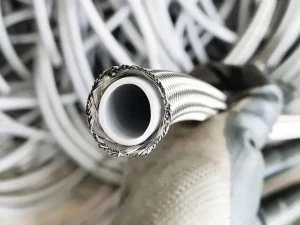
Industrial hoses are special flexible tubes that move liquids, gases, air, and other materials from one place to another. They are made for use in construction, chemical plants, and many other industries. Unlike ordinary hoses, they are built to handle tougher conditions, such as high pressure, heat, chemicals, and heavy use.
The working method of industrial hoses is very straightforward. Any material that needs to move from one place to another can use a hose as a path. For example, a pump can push water into one end of a hose, and the water travels through and comes out the other end. This same working idea applies to oil, air, chemicals, and other materials.
However, what makes industrial hoses stand out is their flexibility. Regular hoses that you see are often stiff. This makes them difficult to fit in tight spaces. However, industrial hoses are made with materials like rubber, PVC, and thermoplastic. These materials are highly flexible and can bend easily without the risk of breaking. But with flexibility, they are also strong at the same time.
Basically, industrial hoses are made with several layers. The inner layer carries the material and is designed to suit what it transports. Then there comes a reinforcement layer that gives the hose extra strength. This becomes especially important when the material inside is under pressure. Lastly, the outer cover protects the hose from damage outside, such as heat, sunlight, oil, or rubbing against other surfaces.
What Are the Main Functions of Industrial Hoses?
Now you have basic know-how about industrial hoses and how they work. Right? But if you think these hoses only help carry materials, you are wrong. They also perform different jobs in industrial systems. So let’s discuss the major functions of industrial hoses.
1- Help Move Liquids
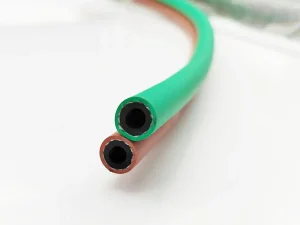
The first major job of an industrial hose is to move different types of material from one place to another. Many workplaces need to move water, liquids, chemicals, or other materials for different operations. An industrial hose gives these liquids a clear path to travel from one point to another. For example, there is a machine that needs a steady supply of coolant while it is running. Here, workers don’t use a fixed pipe that cannot move easily. But they use a hose that connects the coolant supply to the machine. The hose bends around the equipment and allows the liquid to flow where it is needed.
2- Carry Different Gases
It is not crucial that everything that moves through an industrial system is always a liquid. Many machines also have to move gases to reach the right place. Industrial hoses make that possible. They carry gases such as compressed air, oxygen, nitrogen, and other gases used in different industrial operations. Take compressed air as an example. An air compressor produces and stores compressed air. But that air needs a way to reach a machine, tool, or other equipment. Right? That’s the air hose that connects the two and allows the air to flow where it is needed.
3- Handling Abrasive Materials
Some industrial jobs handle materials that slowly wear away the inside of a hose. These are called abrasive materials. Common examples include sand, gravel, cement, minerals, and some slurries. When these materials move through a hose, their hard particles repeatedly rub against the inner surface. It might not cause problems immediately, but over time, they can cause wear. But industrial hoses made for such material are highly robust. Their reinforcement layer is made with abrasion-resistant material like stainless steel. This helps the industry move such abrasive material easily.
4- Connecting Moving Equipment
Machines do not stay in one position while working. Some parts move, lift, rotate, or change position during operation. A fixed pipe cannot easily follow this movement. However, an industrial hose moves easily. Its flexible design lets it connect two pieces of equipment even when one moves. Suppose a machine has a moving arm. The machine needs hydraulic oil, air, or another fluid while the arm moves up and down. Here, an industrial hose connects that arm to the main supply and bends along with the movement.
5- Absorbing Vibration
Another top-notch function of industrial hoses is absorbing vibrations. Basically, industrial machines shake when they run. Pumps, compressors, engines, and other equipment create these small but repeated movements. If these vibrations reach joints, they can put stress on them and loosen them. But industrial hoses act as a flexible link between moving parts and joints. As these parts move, the hose flexes slightly, absorbing movement and preventing it from reaching the joints.
6- Providing Temporary Connections
Industrial hoses are also handy when you need to connect two pieces of equipment for a short period. Sometimes a machine is going through repairs, or a new system is being tested. In that situation, you need a temporary connection. That connection is what an industrial hose offers. For example, a factory has to move water from a temporary tank to a machine for a few days. If you install a fixed pipe for such a short job, it doesn’t make sense. It will be time-consuming and definitely costly. That’s why workers connect an industrial hose between the tank and the machine. Once the job is finished, you can disconnect and remove the hose.
Common Applications of Industrial Hoses Across Different Industries
So many functions show that industrial hoses aren’t limited to one type of work. That’s why many industries use them to gain different advantages. So let’s discuss and explore the major industries where industrial hoses actually perform.
1- Manufacturing Industry
The manufacturing industry is one of the main users of industrial hoses. It uses many machines. Most of these machines need fluid and air pressure to operate. Industrial hoses connect those machines to pumps, tanks, and supply lines to deliver fluid. For example, an industrial machine needs coolant to prevent its parts from overheating. A hose brings coolant from a supply unit to the machine and carries it back after use. Manufacturing workplaces are also crowded, so flexibility is a major priority. These industrial hoses provide that flexibility.
2- Construction
Construction sites are constantly changing. Equipment moves from one area to another. As a result, workers set up temporary systems. In construction, different materials also sometimes need to be supplied where the work is happening. Industrial hoses play a role in all of this. These hoses carry water, compressed air, concrete, cement, and other materials.
3- Oil and Gas
Another use of industrial hose is in the oil and gas sector. This industry moves many fluids between equipment, storage areas, and processing systems. Often, oil and gas move at high pressure. That’s why industrial hoses provide a flexible, durable transfer path. They transfer crude oil, fuel, water, chemicals, and other fluids.
4- Agriculture Industry
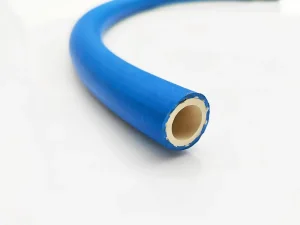
Farming is more than planting and harvesting crops. It uses water, fertilizers, chemicals, and hydraulic fluids, all of which must reach the right equipment or area. Industrial hoses make this possible by giving farmers and agricultural machines a way to move these materials. For example, a water hose carries water for irrigation. It might also move fertilizers through spraying equipment.
5- Chemical Processing
The chemical processing industry is one of the toughest working environments. It deals with liquids and harsh chemicals that ordinary pipes cannot handle. They quickly deteriorate. But some chemical hoses are specifically designed for this purpose. They contain acid- and other chemical-resistant materials that don’t get damaged by these chemicals. However, not every industrial hose can handle chemicals. That’s why the hose material must be compatible with the specific chemical.
6- Food and Beverage Processing
The main concern in the food industry is hygiene. Many food items must move from one part of the process to another without risking contamination. That’s where some food-grade industrial hoses make things easier. They are made from specific food-grade plastic or rubber that doesn’t react with food. Their smooth inner surfaces also make cleaning easier and help reduce the chance of material building up inside the hose.
7- Mining
Now, there is the mining industry, which relies on industrial hoses. It deals with materials like slurry, mud, minerals, and other mixtures. Workers often have to move these materials from one part of a site to another. But the major challenge here is abrasion. Slurry and mineral particles often rub against the inside of a regular hose. As a result, they can get damaged. But Industrial hoses do this job very well. They use a reinforcement layer that handles abrasion without the risk of deterioration.
How to Choose an Industrial Hose for a Specific Application: Key Factors You Must Consider
Industrial hoses are made for different working environments. That’s why they come in different types. You cannot choose a single hose for every purpose. So how would you know which material fits your application? Don’t worry! Here are some factors that you must consider before choosing an industrial hose.
- Material Being Carried: First, know what type of material will flow through the hose. It might be anything like water, oil, fuel, air, chemicals, food products, slurry, or something else. Each material affects the inside of the hose differently. So make sure the hose you choose is compatible with the material flowing through it.
- Working Pressure: Pressure is the force the material puts on the inside of the hose. Different materials exert different forces. So check the hose’s pressure rating and compare it with the pressure in your system. Choose a hose with a safety margin rather than operating right at its maximum limit.
- Hose Size & Diameter: Hose size decides how easily the material will flow through the hose. In terms of size, the most important thing is the hose’s inner diameter (ID). It determines the space available for the liquid or gas to pass through. The diameter should match the flow rate, equipment connections, and system requirements.
- Flexibility & Movement: Some hoses stay in one position, while others move every time the machine operates. That’s another factor that can affect your choice. If the hose is to bend, move, or follow a machine’s motion, make sure it is flexible enough for that job. Consider how the hose will move during operation, and choose a design that can handle it.
- External Conditions: Finally, look at everything the hose will face from the outside. If it will constantly face sunlight, rain, heat, cold, oil, chemicals, dust, or sharp edges, make sure the material can handle it all.
Conclusion
Industrial hoses are flexible tubes that carry many types of material from one place to another. They move water, oil, chemicals, air, food products, and other materials. But their role isn’t limited to that. They also help connect machines, reduce vibration, and make temporary connections much easier. But with so many types of industrial hoses, choosing the right one is key. Before choosing one, look at what it will carry, the pressure and temperature, the hose size, and how much it needs to move. Remember, a hose that fits the job lasts longer and prevents leaks, damage, and unwanted downtime.